




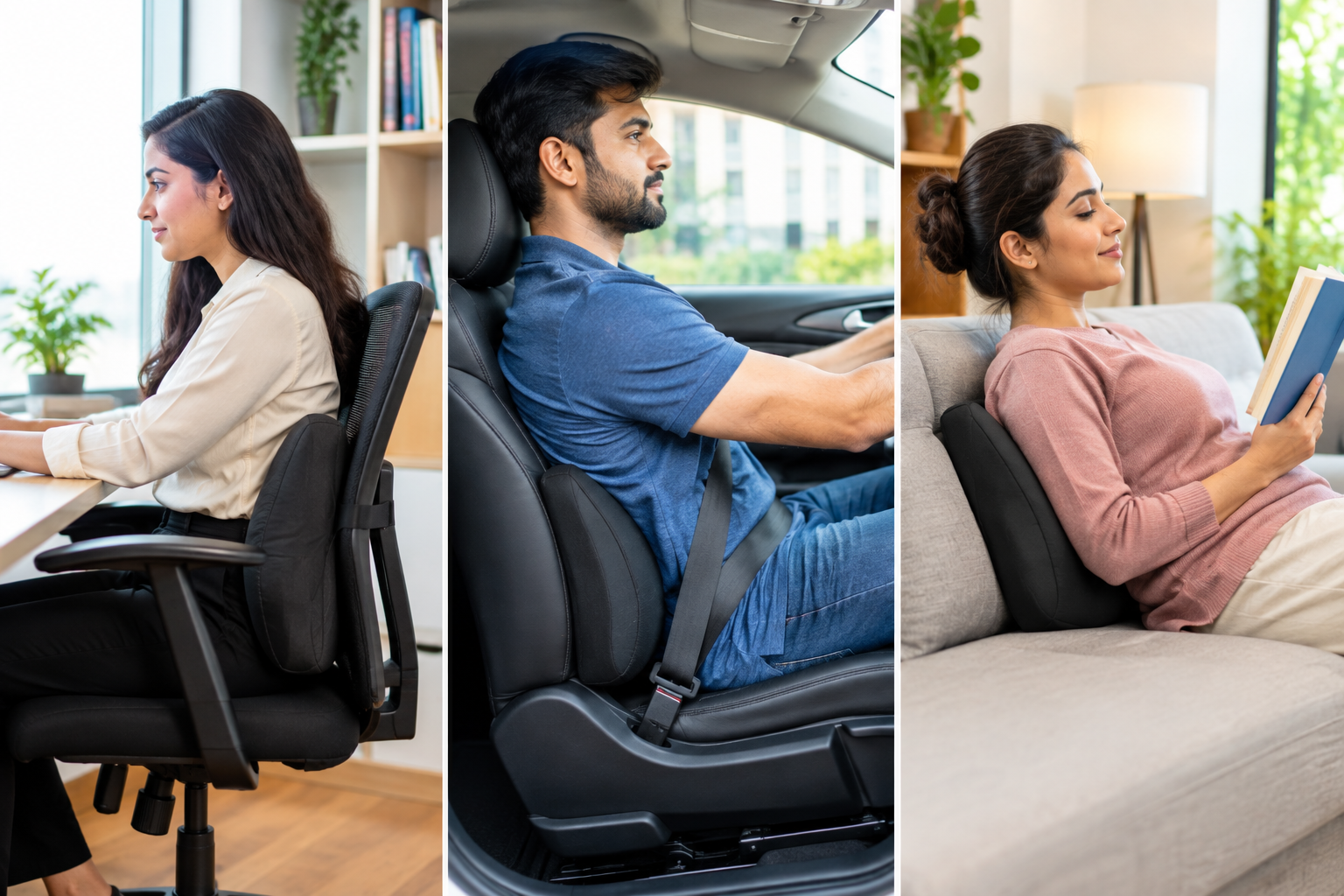
Let me guess—you’ve been sitting for hours, and your back is not happy about it. You know the feeling: that dull ache, the tension creeping up your spine. The answer? An orthopedic backrest. It’s not magic, but it’s close. These backrests restore the natural curve of your lower back, a curve your spine misses every time you sink into an unsupportive seat.
But here’s the thing: not all backrests are created equal. Your office chair, car seat, and sofa aren’t interchangeable, and neither is the support they need. Choose wisely, and your back will thank you for years.
Comparing Backrest Materials
What makes one backrest better than another? It all starts with the material.
| Material | Key Properties | Best For | Pros & Cons |
| High-Density Memory Foam | Molds to your back using body heat; slow recovery | Office chairs & cars | Effortless comfort but can get warm without gel |
| Molded High-Resilience Foam | Firm, bounces back quickly; holds structure well | Deep sofas & soft seating | Reliable support but less adaptive |
| Mesh or Air-Flow Systems | Stretched, breathable fabric over a curved frame | Long office hours, hot weather | Cool and airy but not very cushioned |
So, what should you go for? Look at how and where you sit. And then, match the material to the job.
Orthopedic Backrest for Office Chair
Let’s face it—your office chair might be the reason your back’s screaming. If you’re spending eight-plus hours at a desk, you need more than a cheap fix. Look for: adjustable straps, high-density foam, and breathable covers. The straps matter because they stop the backrest from sliding down (ever had that happen mid-meeting? Frustrating). Foam needs to be dense enough to last because who wants it flattening within months?
Oh, and skip massive wedge cushions. They’ll shove you so far forward you’ll be dangling off the edge of your chair. Not fun.
Orthopedic Backrest for Car Seat
Cars are tricky. Between the steering wheel, airbags, and limited space, there’s not much wiggle room—literally. Here’s the rule: low-profile backrests only. They shouldn’t push you toward the wheel or block your seat’s built-in adjustments.
Pick a slim option (under three inches thick). Look for ones with anti-slip backing to stay put over bumpy roads, and something breathable like bamboo charcoal foam to keep you cool on long drives. One more thing: avoid “full-style” cushions that interfere with airbags. Safety first!
Orthopedic Backrest for Sofa
Now the sofa. It’s the ultimate comfort zone, right? Wrong—at least for your back. Sofas are too soft to provide real support. If you slump on yours every night, you need a backrest that can keep its shape.
Firm molded foam or structured wedge cushions are what you need here. They’ll resist collapsing under you and hold that sweet lumbar curve in place. Whatever you do, don’t buy soft memory foam for this job. It sinks into the couch just like you do, and that helps nobody.
What to Look For Before You Buy
Buying one of these things isn’t complicated if you know what to check. Let’s break it down:
- Strapping system: Dual adjustable straps for office chairs are non-negotiable.
- Fabric cover: Should be removable and washable. Look for materials like 3D mesh or soft suede if you’re fancy.
- Foam density: High-density is key—somewhere in the 60–80 kg/m³ range so it lasts longer than your last cushion.
- Certification: Make sure it’s OEKO-TEX or CertiPUR-US certified so you know it’s safe and non-toxic.
Finding the Right Fit
No matter where you sit—whether it’s a nine-to-five grind, a long road trip, or Netflix on the couch—your spine deserves better. Don’t expect one cushion to rule them all. Pick the right backrest for where and how you sit, and you’ll feel an immediate difference. Your back wants the best, trust me.
Not sure where to start? Check out Cyson. They’ve got orthopedic backrest options for your office chair, car seat, and sofa, so you’re covered no matter where you’re sitting. Support your spine. Start now.